
From the Lesson Tee · Lachlan Robinson
Why Getting Better Can Make You Worse (At First)
Improving your golf swing doesn't always mean playing better golf straight away
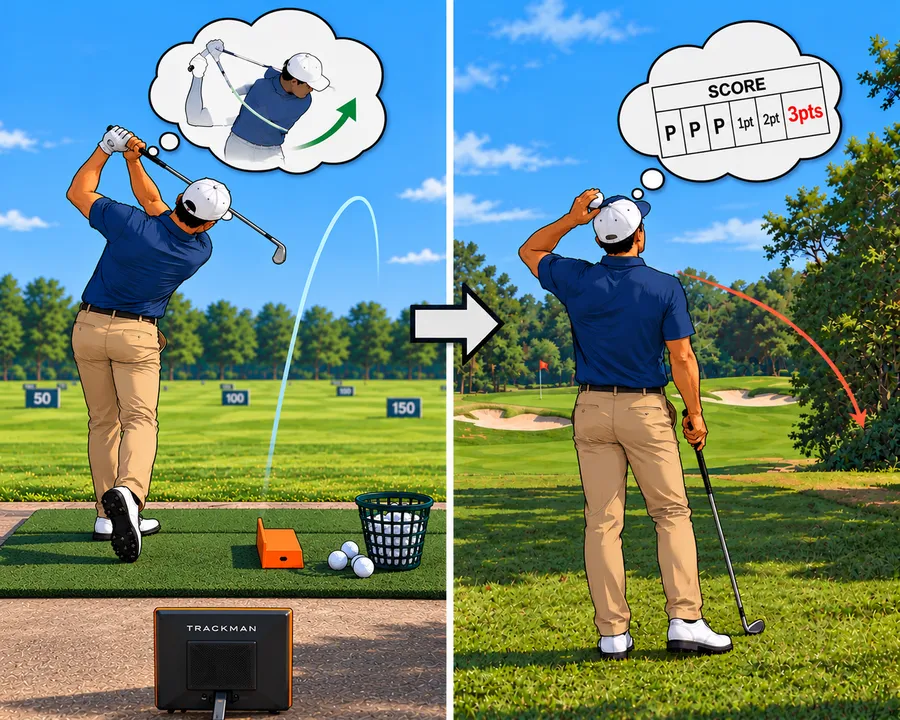
You've been working hard on your swing. Your technique is improving, the motion is changing, you've actually been practising! But there's one problem…
You're playing worse golf!
It's one of the most frustrating parts of improving at golf, and something I see regularly when coaching.
But here's the thing: a better swing doesn't always produce better results straight away. Sometimes, improving your technique actually makes it harder to control the golf ball, at least temporarily.
Why this matters
There's an important distinction between improving your golf swing and improving your ability to play golf.
Think about how professional athletes structure their training. In many sports, athletes use a process called periodisation, where different stages of the season have different priorities.
During the off-season, there's opportunity to develop technique, experiment and make significant changes. As important competitions approach, the emphasis shifts towards performance and getting the most out of the skills they've developed.
Golf should be no different.
Small adjustments can help improve your current ball flight almost immediately — really useful when there's a big event coming up for you.
Significant swing changes often require time, repetition and a willingness to accept some short-term struggles. So it is not recommended we do this in the middle of the club championships.
The two-way miss
Let's use one of the most common swing changes as an example: correcting an excessively out-to-in swing path.
Imagine a golfer who consistently hits a fade or slice. Their club travels significantly across the ball from outside to inside. Over time, they've learnt to manage their clubface to make that ball flight relatively predictable.
Now we start improving their swing path. Suddenly, the ball isn't behaving as expected.
Sometimes their familiar slice returns. Other times, the ball starts left and stays left, or even hooks! They've gone from having one predictable miss to missing both ways.
Why? Because although their swing path is changing, their ability to control the clubface hasn't necessarily caught up. As they become more comfortable with their new movement, they can begin coordinating the face and path more consistently.
The important thing to understand is that, in the short term, a predictable slice might actually produce better scores than a technically improved swing with an unpredictable two-way miss. After all, if you can predict your ball flight, you can plan around it.
Measuring progress differently
This is where feedback becomes incredibly important.
When making a significant swing change, judging your progress purely on where the ball finishes can be misleading.
If you're working on your swing path and have access to TrackMan, for example, tracking your average club path over several sessions can provide evidence that you're moving in the right direction — even if your ball flight hasn't improved yet!
Without technology, you can still record your shot patterns and observe how they change over time.
Remember: not every bad shot during a swing change is a step backwards, and not every good shot means you're moving in the right direction. We need to look at the overall trend.

Pro tip: Know whether you're practising to improve your technique or practising to improve your performance. They aren't always the same thing.
Your drill for the week: track your misses
Next time you're at the driving range, hit 15 shots towards a target using one club.
Record whether each shot misses left, right or finishes near your target. Make a quick note of the curvature, too.
Repeat this test over your next few practice sessions.
Rather than judging individual shots, look for patterns. Are your misses becoming more predictable? Is your shot pattern changing?
If you're working on a technical change, compare these results with feedback on the movement you're trying to improve. For example, “I felt excessive body rotation, and noticed more shots finished left of target.”
Making a swing change is one thing. Knowing what to change, when to change it and how to measure your progress is another. If you'd like some help developing a plan that improves both your technique and your performance, book a lesson with me and we can get to work.
See you on the course,
Lachlan